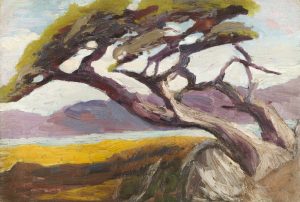
MARY DENEALE MORGAN
Mary DeNeale Morgan was born in San Francisco in 1868 but spent most of her artistic career living and working on California’s Central Coast. Morgan was an early proponent of plein-air painting in California and a leading figure of Carmel-by-the-Sea’s artistic community during the first half of the twentieth century.
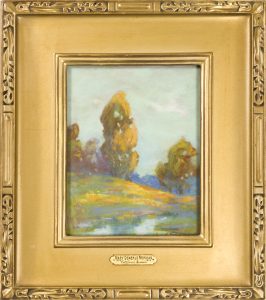
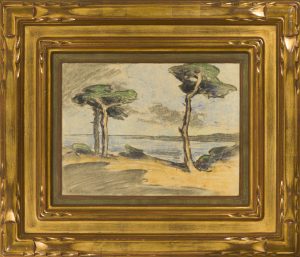
Morgan received her artistic training at the California School of Design in San Francisco between 1886 and 1892 under the mentorship of several notable artists including painter Arthur Mathews. She later worked with Scottish-American painter William Keith, who was a neighbor and family friend in Oakland, where she was raised. Both Mathews and Keith influenced her initial style of painting, which was distinguished by a Tonalist approach primarily in tempera.
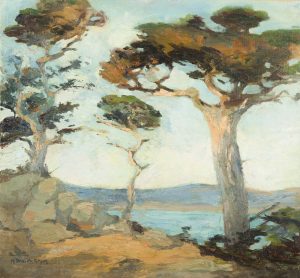
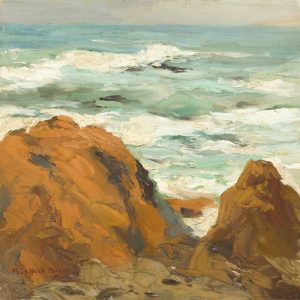
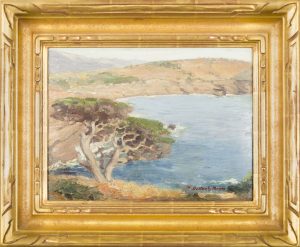
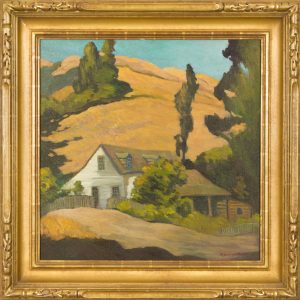
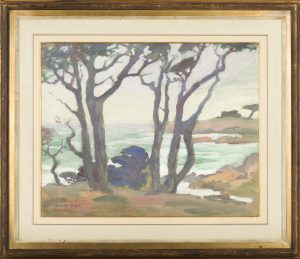
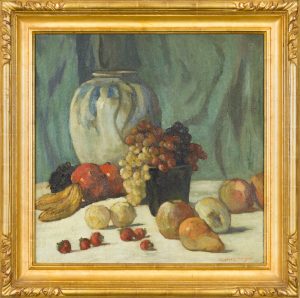
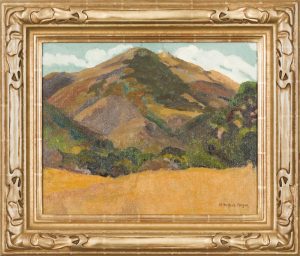
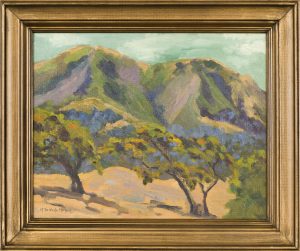
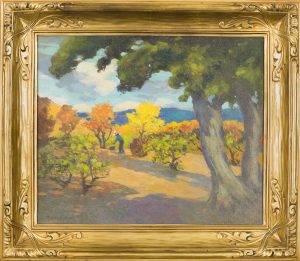
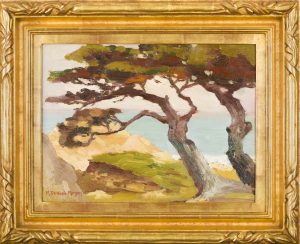
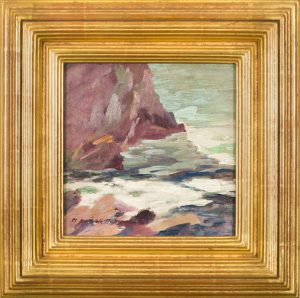
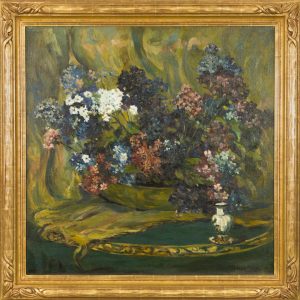
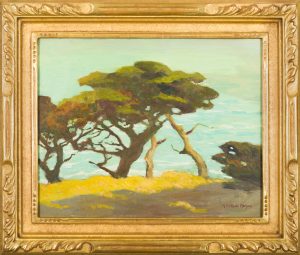
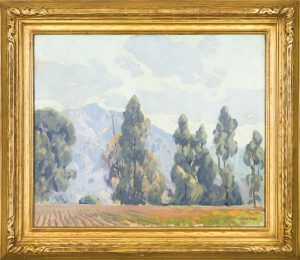
Although working in the Bay Area, Morgan frequented the California Central Coast, initially with a painting trip to the northern agricultural region of Monterey Bay in 1902. She later settled in Carmel-by-the-Sea in 1910, and studied there with the American Impressionist William Merritt Chase during his summer teaching residency in 1914. Over time, her painting style shifted from ethereal Tonalist landscapes to vibrant, impasto, palette-knife painted scenes of the coast and the inland areas she called home. She took a particular liking to the Monterey Coastline, painting its majestic cypress trees and rocky cliffs, and eventually became part of a local conservationist movement that sought to preserve Carmel-by-the-Sea’s public access and beaches. She was a co-founder of the Carmel Art Association, and a prominent member of the early twentieth century Carmel Art Colony. In 1924, Scriber’s Magazine identified her as a foremost woman artist in the United States. Morgan died in 1948 at the age of 80.
Morgan’s works are held in collections across the United States, including the Crocker Art Museum, Monterey Museum of Art, Los Angeles County Museum of Art, and Oakland Museum of California, among others.